Cedar vs Pressure-Treated Fence: Cost, Looks and Upkeep
How cedar and pressure-treated wood fences compare on price, colour, rot resistance and staining, and why the posts decide how long either one lasts.
Pressure-treated is the budget choice, and it holds up well when it's built right. Cedar costs more, looks finished the day it goes up and stays flatter as it dries. On a 100 ft backyard fence the difference is about $2,000. Either wood fails early if the posts are wrong, so check how the fence will be built before you pick the boards.
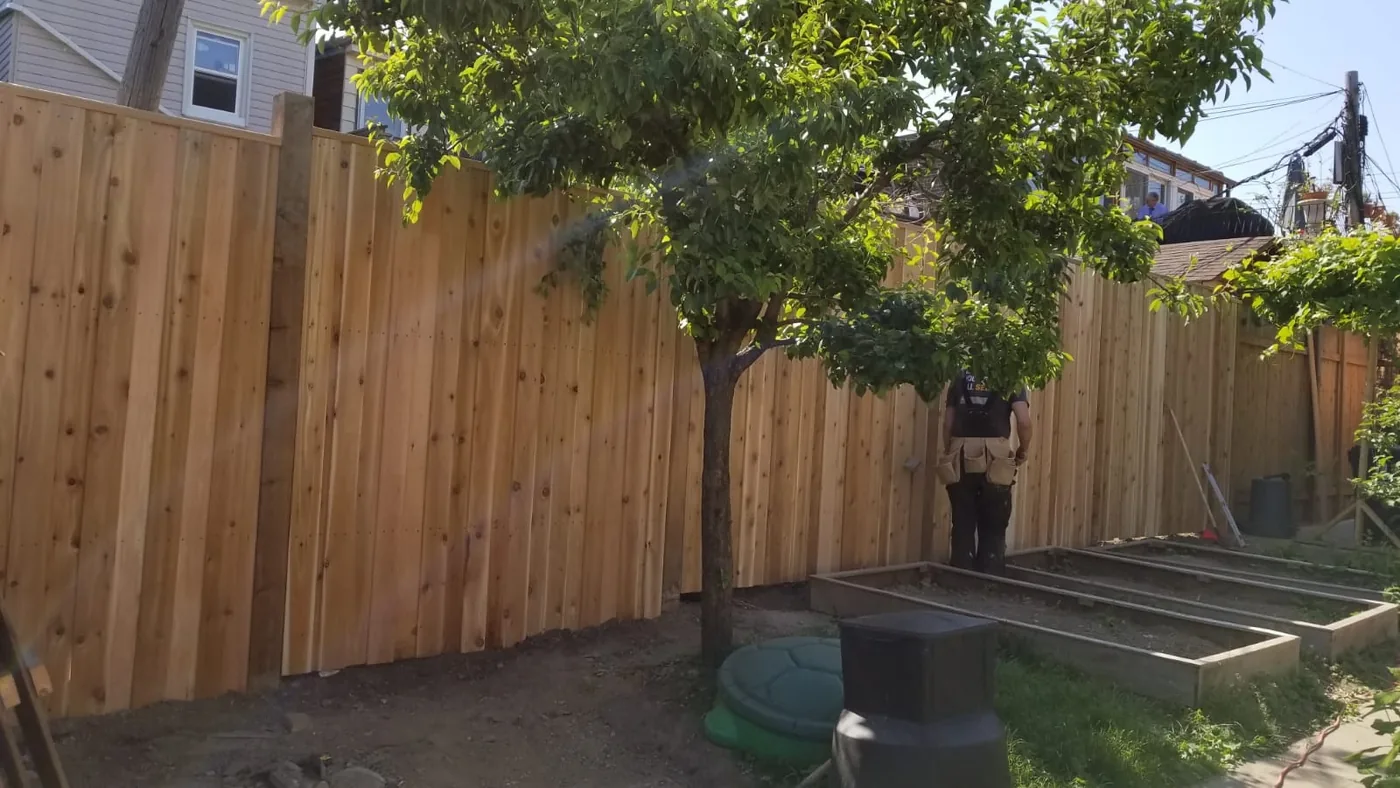
Cedar vs pressure-treated at a glance
| What matters | Pressure-treated | Cedar |
|---|---|---|
| Installed, per linear ft | $70 to $100 | $90 to $120 |
| 100 ft of fence | $7,000 to $10,000 | $9,000 to $12,000 |
| Colour when new | Green or brown tint from the treatment | Warm reddish brown |
| Left unfinished | Weathers to grey | Weathers to silver grey |
| Rot protection | Preservative forced into the wood under pressure | Natural, in the heartwood |
| As it dries | Shrinks and moves more | Stays flatter, joints stay tighter |
| Surface | Harder | Softer, marks more easily |
| Staining | Wait until the wood has dried | Optional, to keep the colour |
Installed prices before HST, from our fence cost guide. Horizontal cedar runs $100 to $140 per linear ft. Gates and removing the old fence are extra.
What you get with pressure-treated
Pressure-treated fence lumber is softwood with a copper-based preservative forced into it under pressure. Health Canada lists alkaline copper quaternary (ACQ) and copper azole as the preservatives used for residential wood today. The preservative is what gives new boards their brown or greenish tint.
The treatment protects the outside of each piece best. When a board or post is cut on site, the inside is exposed. Wood Preservation Canada says those cuts and drilled holes need a field-applied preservative, at least 2 coats, or the wood may not last as long as it should.
- Lowest price per foot of any wood fence
- Takes stain in almost any colour once it has dried
- A harder surface that stands up to knocks
- Cheap to patch a board or two later
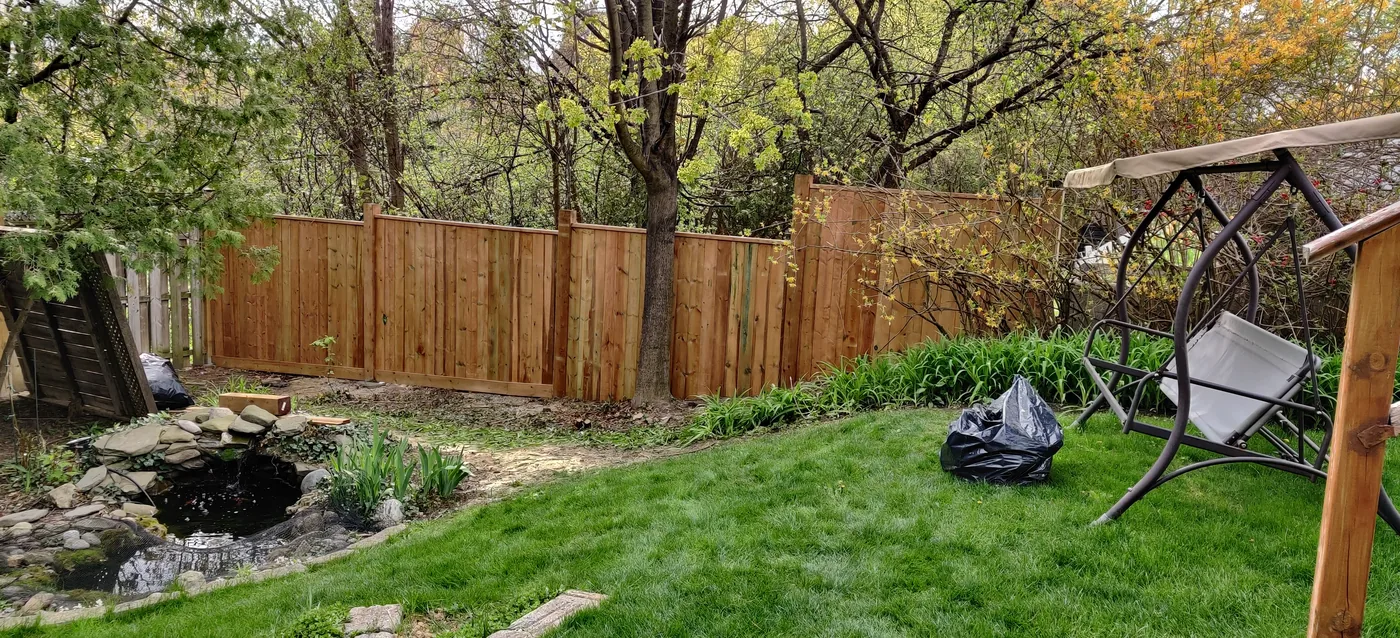
What you get with cedar
Cedar's rot resistance comes from the heartwood, the darker centre of the log. A U.S. Forest Products Laboratory note on wood durability is clear on this: decay resistance rests only in the heartwood, and sapwood should be left out where long life matters. Boards with a lot of pale sapwood won't have the same protection.
Cedar resists warping and twisting better than treated lumber, so the boards sit flatter and the joints stay tighter as they dry. That matters most on a solid board fence, where gaps would open up, and on a horizontal fence, where long boards have to stay straight. It is also softer, so a hard knock can dent it.
Left alone, cedar fades to silver grey over a few seasons. A stain or sealer holds the warm colour. That's a choice about looks more than something the fence needs.
A common build: cedar on treated posts
Posts are the one part of a fence that sits in wet soil all year. A lot of cedar fences in the GTA are built on pressure-treated posts rated for ground contact, with cedar rails and boards on top. You see cedar everywhere you look, and treated wood takes the wettest spot. It's the same idea as a cedar deck on a treated frame.
The posts matter more than the boards
Most wood fences fail at the posts, whatever wood is on top. Before you compare board prices, ask how the posts go in:
- Posts rated for ground contact. CSA O80, the Canadian standard for treated wood, puts wood that touches the ground in its own category, Use Category 4, separate from wood used above ground
- Set in concrete about 1.2 m (4 ft) deep, below the frost line, so frost can't push them up
- Concrete sloped away from the post so water runs off instead of sitting against the wood
- Cut ends and drilled holes field-treated with preservative
- Hot-dip galvanized or stainless steel fasteners. The Canadian Wood Council says nails in copper-treated wood must be hot-dip galvanized, and points to stainless steel for the longest life
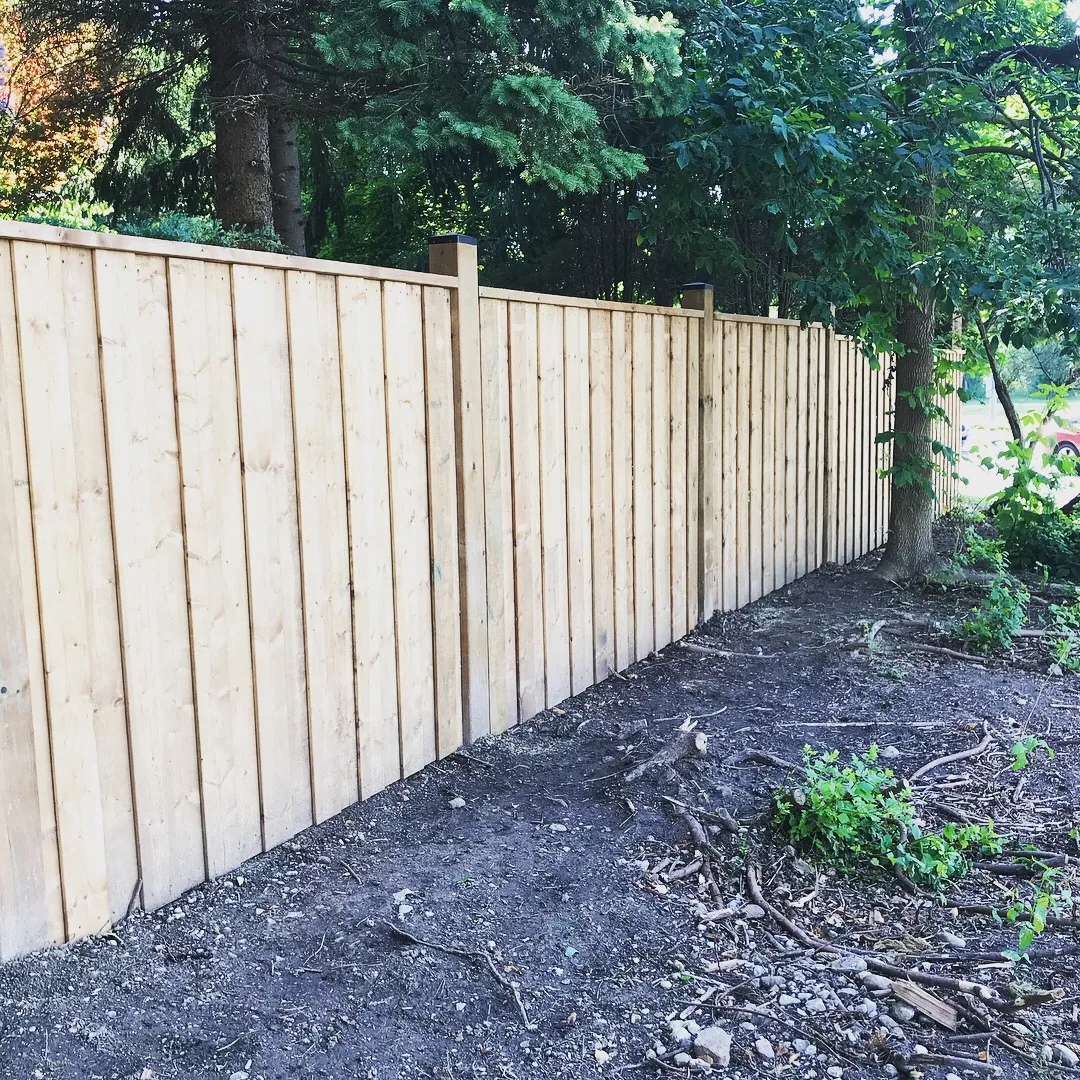
Our fall and winter fence guide shows what frost does to a post that isn't set deep enough.
Staining and upkeep
New pressure-treated wood needs to dry before it takes stain. Viance, which makes the Preserve CA treatment, says the wood should be dry and clean before any finish goes on. Sprinkle a few drops of water on a board. If they soak in, it's ready. If they bead up, give it more time. A fence built in fall usually dries over the winter.
Cedar can be stained or sealed to hold its colour, or left to go grey. With either wood, keep soil, mulch and firewood from piling against the bottom of the boards, where wood stays wet longest.
One safety note for treated wood: Health Canada says never to burn it, indoors or outdoors. Keep treated offcuts out of the fire pit.
Which one we'd pick
If budget leads, pressure-treated on well-set posts makes a sound fence, and you can stain it once it dries. If you want the fence to look finished the day it goes up, you're building horizontal, or the neighbours are close and gaps would bother you, cedar is worth the extra $20 or so per foot.
Still deciding on wood at all? Our vinyl vs wood guide covers the other option, and the fence height guide tells you how tall you can build in your city. See our wood fences page, or send us the length and a few photos and we'll price both.
Sources: Canadian Wood Council, CSA O80 wood preservation and Fasteners; Wood Preservation Canada, The importance of field treating pressure treated wood products; Health Canada, Staying safe around treated wood; U.S. Forest Products Laboratory, Comparative decay resistance of heartwood of native species; Western Forest Products, Western red cedar fencing; Viance, Preserve CA fact sheet (Canada). Checked October 2026.
Keep reading
Deck cost guide
Installed prices per sq ft by material, plus railings and stairs.
Learn moreFence cost guide
Installed prices per linear foot by fence type, plus gates.
Learn moreFall and winter fence installation
What cold weather changes, and why fall is a good time to build.
Learn moreFence height bylaws by city
Front, side and rear yard limits for 28 GTA municipalities.
Learn moreQuestions
Is cedar worth the extra cost for a fence?
Does a cedar fence last longer than pressure-treated?
How long should I wait to stain a new pressure-treated fence?
Why is my new pressure-treated fence green?
Tell us about your deck or fence
Send a few photos and rough measurements. We'll come back with next steps and a time to see the site.