Can You Install a Fence in Fall or Winter in Ontario?
Why fall is a good time to build a fence in the GTA, what frozen ground and cold weather change, and what can still go ahead in January.
Yes. Fall is one of the best times of year to put up a fence in the GTA, and plenty of fence work carries on into winter. The cold changes how the posts go in. It doesn't change the fence.
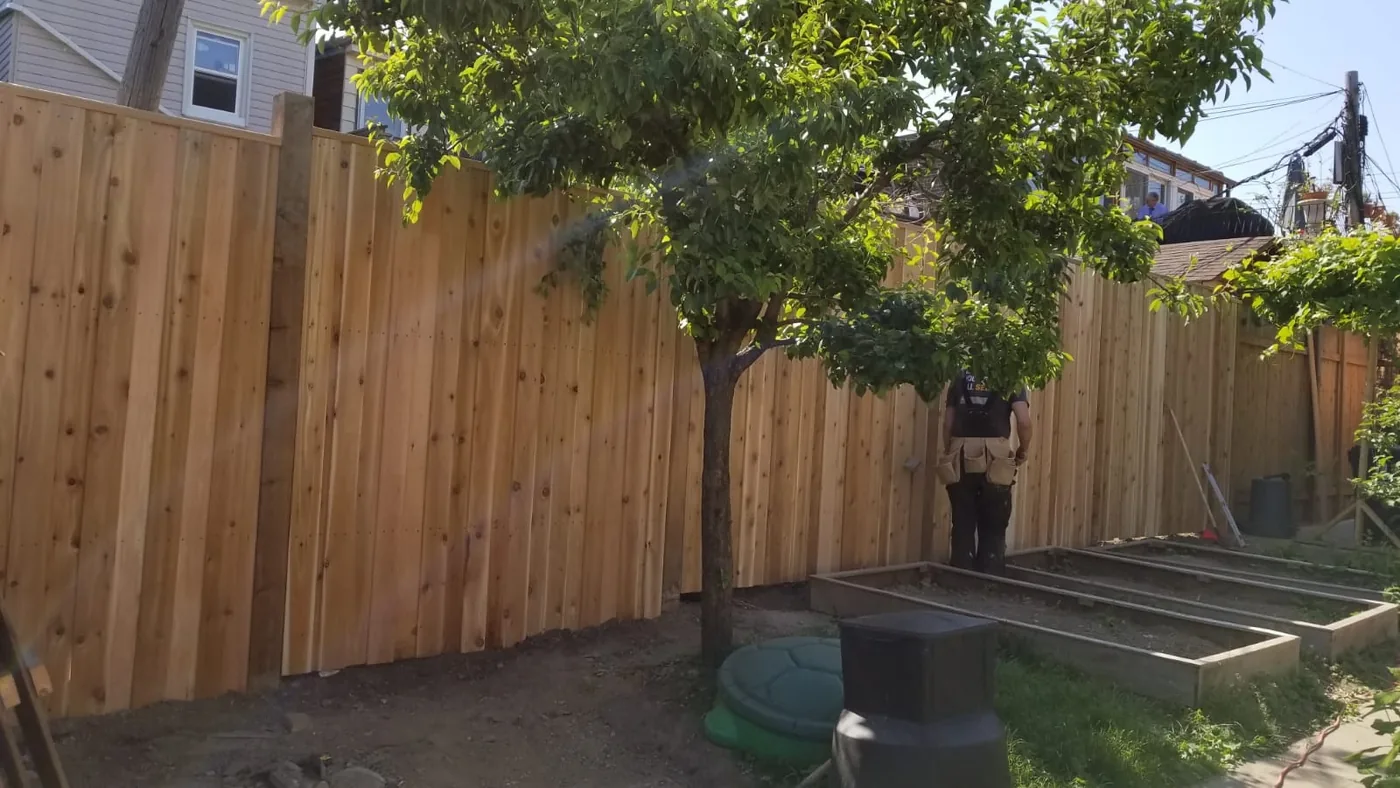
Fence season at a glance
September to November: the sweet spot
The ground is soft enough to dig and firm enough to hold a post. Crews have more open dates than in spring.
December: a weather call
Posts can usually go in until the ground freezes hard. That date moves every year with the weather.
January and February: frozen ground
New post holes are slower and cost more. Repairs and work on existing posts go ahead.
March and April: the thaw
Wet, soft ground slows digging, and spring bookings fill up fast.
Why fall works well for a fence
- Spring is when everyone calls. In fall you get more choice of start dates
- The yard is closed in for the dog and private from the neighbours all winter, with nothing left to wait for in spring
- Gardens along the fence line are dying back, so there is less to dig around and less to damage
- New pressure-treated wood needs to dry before it takes stain. A fall fence dries over the winter and is ready to stain in late spring or summer
1. Frozen ground is the real limit
We set fence posts in concrete about 1.2 m (4 ft) deep, below the frost line, so frost can't push them out. Getting that deep is easy in October. Once the top of the ground freezes hard, it becomes a different job.
The frozen crust has to be broken through before the auger can do its work, which takes more time and more equipment. Frozen chunks can't go back in the hole as backfill either, because they settle when they thaw. That is why new fence lines in deep winter are slower and cost more, and why we look at the ground before committing to a January date.
2. Concrete has to be kept from freezing
Concrete hardens through a chemical reaction, and cold slows that reaction down. Cold weather guidance from the concrete industry is to keep fresh concrete from freezing until it reaches about 3.5 MPa (500 psi), which typically takes about two days. Concrete that freezes before then can end up weaker.
Two rules follow from that. Concrete never goes onto frozen soil, ice or snow at the bottom of a hole. And when a hard freeze is in the forecast, the posts either go in with protection or wait a few days.
The shape of the footing matters as much as the depth. The concrete should slope away from the post so water runs off instead of sitting against the wood. A footing that flares out wide at the top gives frost something to grab, and that is how posts get pushed up.
3. Locates still come first
Every post hole needs utility locates before anyone digs, in every season. On October 1, 2026, Ontario One Call started operating as Ontario Dig Authority. The name changed and the service didn't: locates are still free, and a request for a single address still needs 5 business days.
The free locate covers utility-owned lines. It doesn't cover private ones, like the gas line to a BBQ or pool heater, or power run out to a shed. Those need a private locator. Late in the year, paint marks and flags are also harder to find once snow covers them, so the digging should follow the locate closely.
4. Materials in the cold
Wood, aluminum and chain link go in the same way in November as in June. Vinyl is the one to watch. It gets stiffer in the cold, so it needs careful handling, and a hard knock on a very cold day can crack a panel. Our vinyl vs wood guide covers how the two compare overall.
5. Shorter days
There is a lot less daylight in November and December, so a job can run a day longer than it would in summer. The finished fence is the same.
What still goes ahead in deep winter
Frozen ground stops new post holes. It doesn't stop everything:
- Replacing boards, rails and pickets on posts that are still solid
- Gate repairs, new hinges and new latches
- Posts on steel bases bolted to existing concrete, like a patio, a path or a wall
- Site visits, measuring and quotes, so you're near the top of the schedule when the ground thaws
The first winter tells you how the posts were set
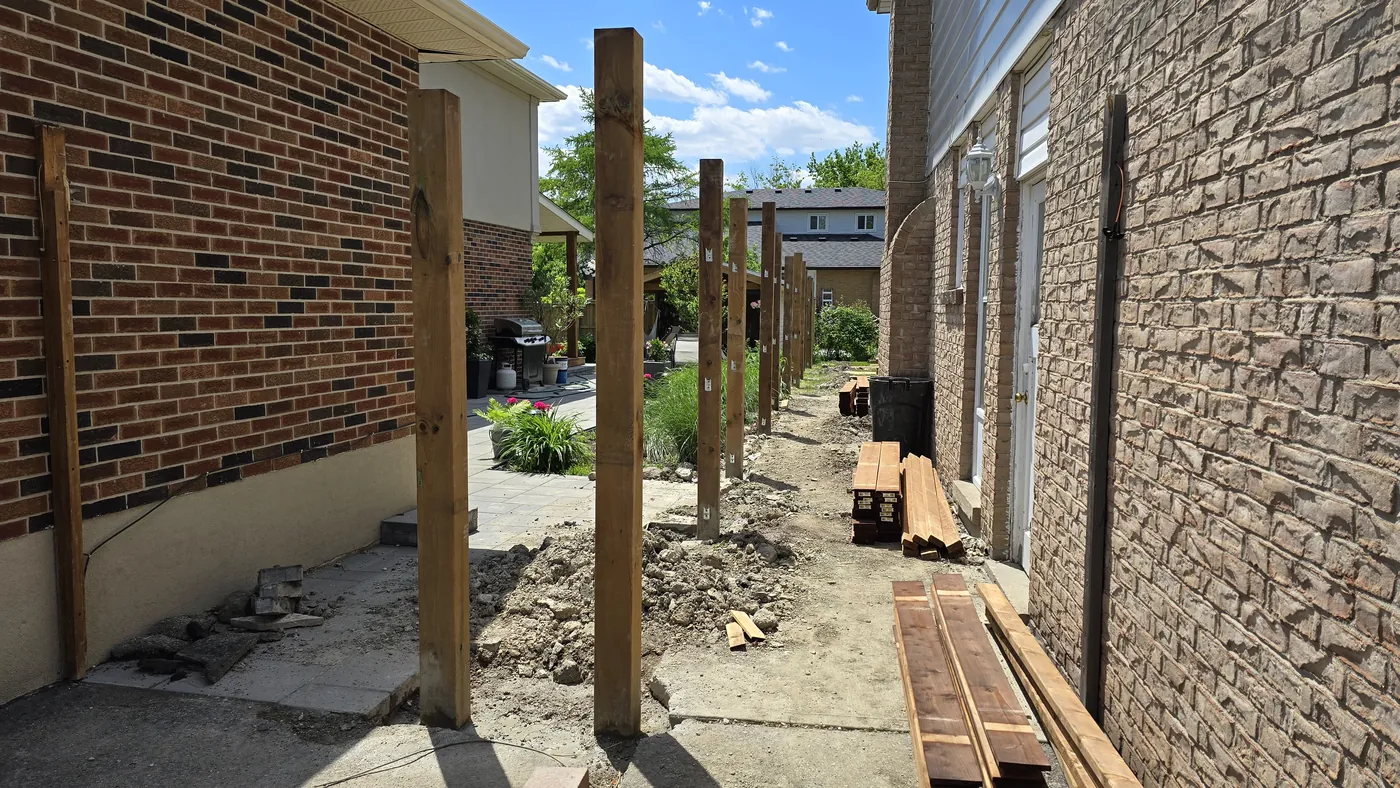
A fence that leans after one winter almost always has a post problem. Posts set too shallow, or set in a footing that flares at the top, get lifted a little with every freeze and never settle all the way back. A fence built in fall gets that test right away. Set to the right depth, in concrete shaped to shed water, it stays put.
If your posts already heaved last winter, our fence repair page covers how we reset or replace them.
Our advice
- Want the fence up before winter? Get in touch in September or October
- If your date slips past a hard freeze, we'll tell you plainly whether to go ahead or wait for spring
- Check how tall your fence can be first. Our fence height guide lists the limits by city
- Fencing around a pool? Read the pool fence rules first. They are stricter, and every municipality we checked requires a permit
- Working out a budget? The fence cost guide has installed prices per foot
Sources: Ontario Dig Authority, Locates overview; Landscape Ontario, Ontario One Call becomes Ontario Dig Authority; National Ready Mixed Concrete Association, Cold weather concreting; Quikrete, Setting posts. Checked October 2026.
Keep reading
Deck cost guide
Installed prices per sq ft by material, plus railings and stairs.
Learn moreFence cost guide
Installed prices per linear foot by fence type, plus gates.
Learn moreFence height bylaws by city
Front, side and rear yard limits for 28 GTA municipalities.
Learn morePool fence rules by city
Enclosure heights, gate latches, permits and hot tub rules.
Learn moreQuestions
Can fence posts be installed in frozen ground?
Is fall a good time to install a fence?
Will a fence installed in the fall heave over the winter?
How late in the year can a fence go in?
Tell us about your deck or fence
Send a few photos and rough measurements. We'll come back with next steps and a time to see the site.