How to Get Your Deck Ready for Winter
What to check before the first snow, when to stain, and how to shovel and melt ice without damaging the boards.
The time to get a deck ready for winter is after the leaves come down and before the first snow. Sweep it clear, push on every railing post, check the stairs and the board ends, and get anything loose fixed while the ground can still be dug. Once the snow comes, use a plastic shovel, push it along the boards, and check your decking maker's care guide before you put down ice melt.
Most of it takes an afternoon. What matters is finding a loose post or a soft stair now. Ice makes both worse, and a railing is the first thing people grab when they slip.
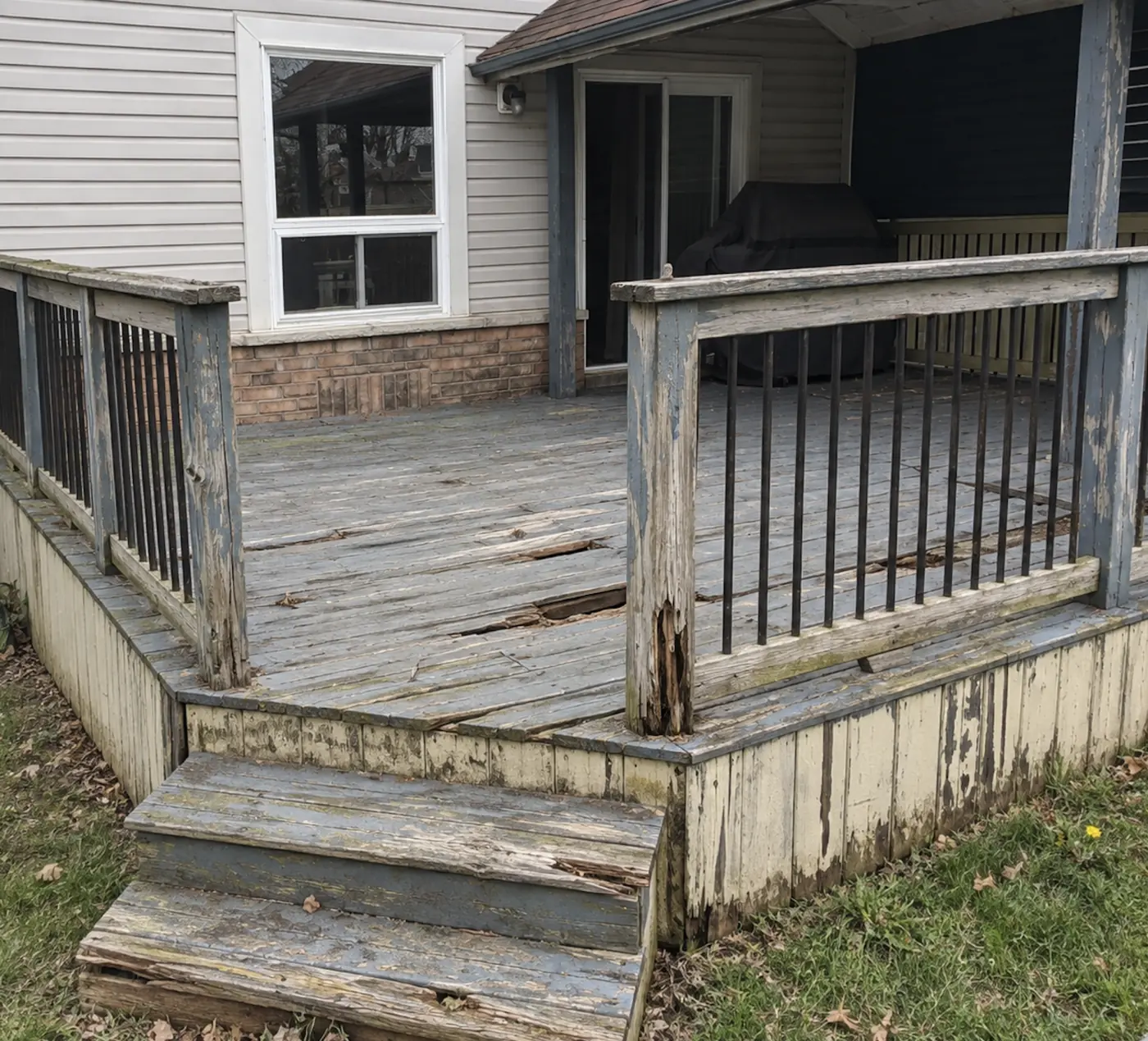
Your fall checklist
- Sweep off leaves and clear the gaps between boards so water can drain
- Push hard on the top of every railing post. It shouldn't move
- Walk the stairs and check each tread, the stringers and the handrail
- Press a screwdriver into board ends, stair treads and the base of each post. If it sinks in easily, that's rot
- Look underneath at the posts, the joists and where the deck meets the house
- Lift planters off the boards, and store or cover furniture you won't use
- Point downspouts away from the deck and the stairs so the water doesn't freeze there
For the screwdriver test, the North American Deck and Railing Association (NADRA) gives a number: if the tip goes in about 6 to 13 mm (1/4 to 1/2 in) without much push, decay may be present. Trex also recommends sweeping leaves off before the snow, since anything left under it sits on the boards all winter.
Railings and stairs come first
A railing post that has rotted at the base still looks like a railing until someone leans on it. In winter that someone is often slipping on ice. NADRA's homeowner checklist says railings and stairs should not sway or move when you test them, and that it matters more the higher the deck sits.
Check the stair handrail the same way, then look at where the stringers meet the deck and the landing. Stairs that have pulled away from the landing have usually been moved by frost, and another winter of freezing and thawing will move them further.
The Ontario Building Code requires a guard on any deck more than 600 mm (24 in) above the ground. Our deck railing height guide covers the heights and spacing.
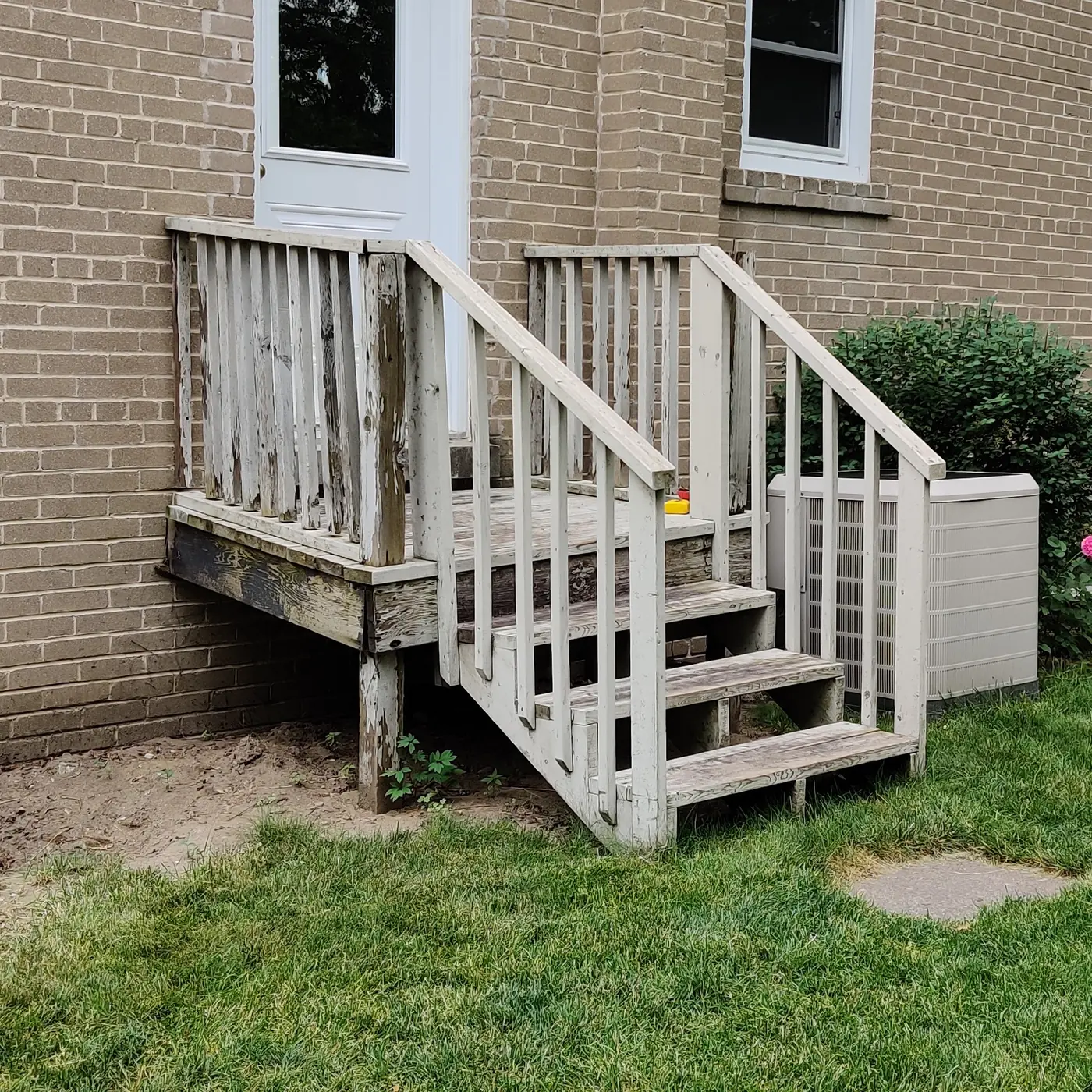
Look underneath
Boards are easy to see. The problems that matter usually sit under them. Take a flashlight and check:
- Posts: rot at the base, or a post that has tilted or lifted off its footing
- Joists: soft spots, cracks or sagging, especially near the house
- The ledger, the board that fastens the deck to the house. NADRA says it should not be held on with nails alone
- Flashing over the ledger, which keeps water out of the house wall. It should be sound and firmly in place
- Fasteners: rusted, loose or popped nails and screws
A deck that has gone out of level often sits on footings that frost has lifted. Our deck footing depth guide explains how that happens and how deep footings go.
Stain now or wait for spring?
Composite and PVC decks don't need stain or sealer. Clean them off and leave them.
Wood needs dry, mild weather for a finish to soak in and cure. PPG's REZ deck stain, as one example, calls for air and surface temperatures above 10°C (50°F), and warns against staining late in the day when dew is likely. If the forecast has already dropped below that, follow the label on your stain and leave it until spring.
New pressure-treated wood also has to dry out before it takes stain. Sprinkle a few drops of water on a board. If they soak in, it's ready. If they bead up, wait. A deck built this fall is usually ready by late spring or summer. Our cedar vs pressure-treated guide covers the same test for fences.
Shovelling and ice melt
TimberTech recommends clearing snow off a deck regularly through the winter, to take the weight off the boards and keep moisture down. For a light dusting, a broom is enough.
Use a plastic shovel or one with a rubber edge. Metal blades scratch composite, and Trex warns that shovel scratches aren't covered by the warranty on its older decking lines. Push along the length of the boards. Viance, which makes wood preservatives, says shovelling across the boards can catch the board edges and damage the surface, and Trex gives the same advice.
Ice melt is where the makers disagree, so check the care guide for your decking before you buy anything:
| Decking | What the maker says about ice melt |
|---|---|
| Trex Transcend, Enhance and Select | Calcium chloride or rock salt can be used |
| TimberTech composite and PVC | Calcium chloride is fine. No rock salt |
| Pressure-treated wood (Viance) | Don't treat ice with salt. If you use a salt-based product, rinse it off once the ice melts to protect the fasteners and hardware |
| Wood and hardwood (TimberTech) | No rock salt |
Skip sand on any deck. TimberTech and Viance both say it scratches the boards.
Keep the gas meter and vents clear
If the gas meter or a furnace or dryer vent sits next to the deck, don't bury it when you shovel. Enbridge says snow and ice on the meter can stop it regulating gas pressure properly, and blocked vents can make appliances malfunction and let carbon monoxide into the home. Clear them with a broom or soft brush, never a shovel or a blower. If the meter is encased in ice, don't chip at it. Call Enbridge.
Found a problem? Fix it this fall
Boards, railings and stairs on a sound frame can be repaired in cooler weather. New footings are harder to set once the ground freezes, so if a post or footing has to go, book it before the deep freeze.
A loose post or a few soft boards doesn't always mean a new deck. On a deck repair in Stouffville, boards had split right through and a corner railing post had rotted at its base, but the frame and the ledger were sound. We replaced what had gone and repainted the whole deck instead of tearing it out.
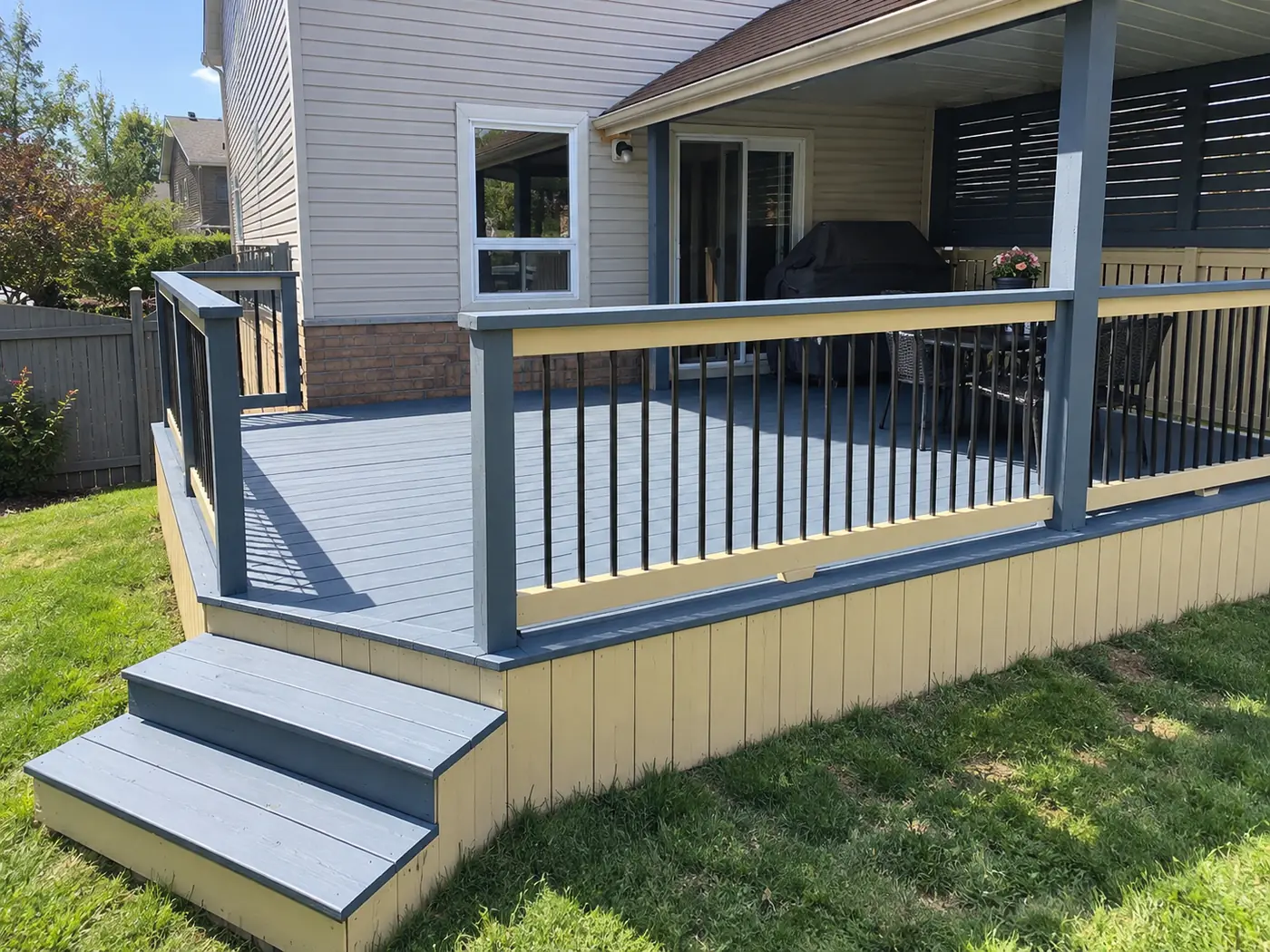
See our deck repair page, or the deck cost guide if it's time for a new one. You can also send us photos of the top, the stairs and underneath the deck, and we'll tell you whether it's a repair.
Sources: NADRA, Deck safety checklist; Trex, How to clean a Trex deck and Tips to care for composite decking in the winter; TimberTech, Decking care tips for winter; Viance, The dos and don'ts to remove snow and ice from your deck; PPG, REZ semi-transparent deck stain data sheet; Enbridge Gas, Keep your meter clear. Checked October 2026.
Keep reading
Deck cost guide
Installed prices per sq ft by material, plus railings and stairs.
Learn moreFence cost guide
Installed prices per linear foot by fence type, plus gates.
Learn moreLeaning fence: fix or replace
Why fences lean, and when new posts will fix it.
Learn moreCedar vs pressure-treated fence
Price, look and upkeep compared, and why the posts matter most.
Learn moreQuestions
Can I use salt on my deck?
Do I need to shovel my deck in winter?
Should I stain my deck before winter?
Can a deck be repaired in late fall or winter?
Tell us about your deck or fence
Send a few photos and rough measurements. We'll come back with next steps and a time to see the site.