Aluminum vs Wood Fence: Which One Fits Your Yard?
Price, privacy, upkeep and front yard rules compared, and where each fence makes sense: pools, front yards or a private backyard.
It comes down to what the fence is for. If you want a private backyard, build wood. An aluminum picket fence is open. It marks the line and keeps kids and dogs in, but the neighbours can still see into the yard.
Around a pool, across a front yard or on a lot with a view worth keeping, aluminum is usually the better fit. It doesn't rot, it never needs stain, and several GTA cities let an open fence stand taller in the front yard than a solid one. Plenty of yards end up with both: wood privacy along the back and sides, aluminum in front or around the pool.
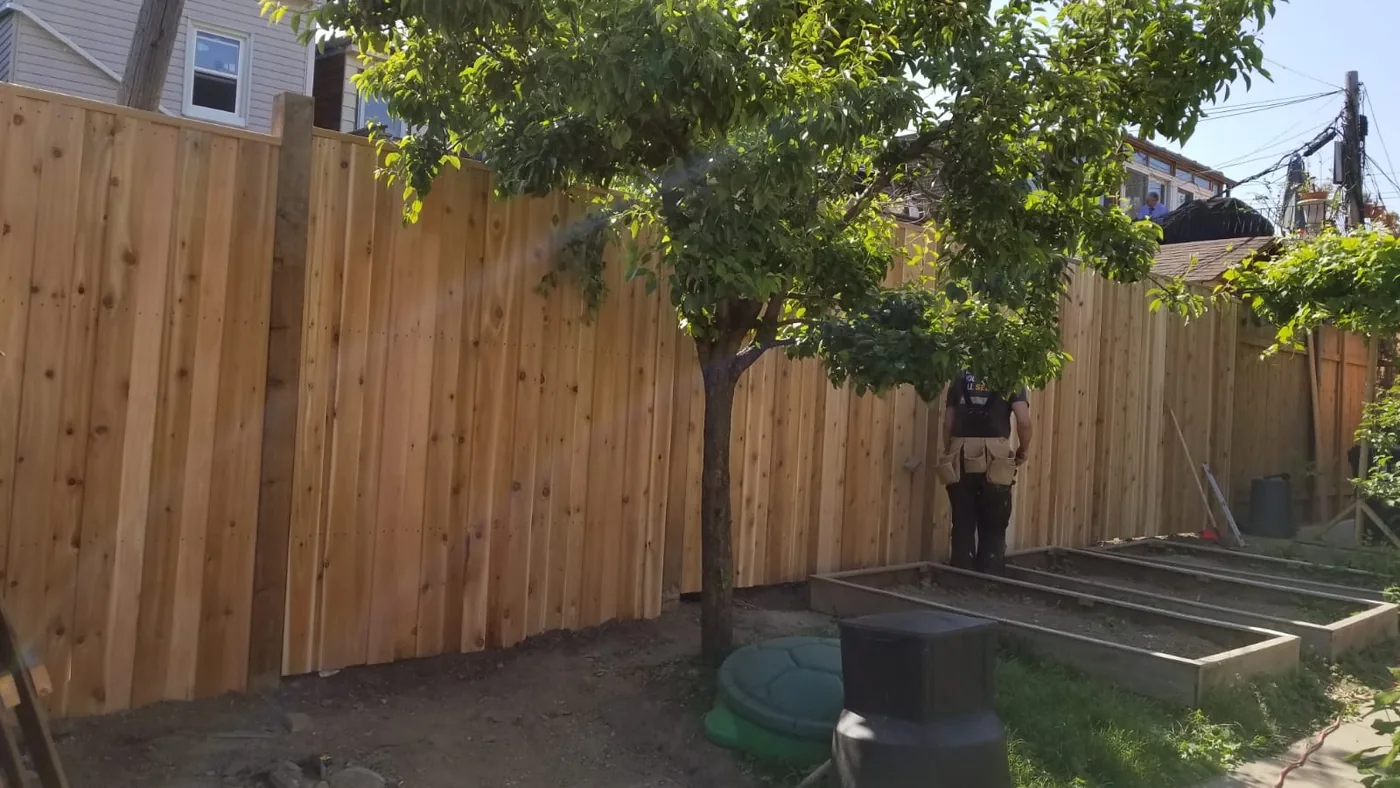
Aluminum and wood side by side
| What matters | Aluminum | Wood |
|---|---|---|
| Installed price, per linear ft | $80 to $200 | $70 to $100 pressure-treated, $90 to $120 cedar |
| Privacy | Open pickets, you can see through | Full privacy with solid or board-on-board boards |
| Upkeep | Rinse it off now and then | Stain or water repellent every few years |
| Rot and rust | Neither | Posts and board bottoms rot over time |
| Damage | Pickets bend if hit | Boards split or warp, single boards are easy to swap |
| Pools | The usual choice | Works with the rails on the pool side |
| Front yards | Counts as open, so often allowed taller | Solid styles get the lower limit |
What each one costs
These are the ranges from our fence cost guide, installed and before HST. For 100 ft of fence:
- Pressure-treated wood, $70 to $100 per linear ft: about $7,000 to $10,000
- Cedar, $90 to $120 per linear ft: about $9,000 to $12,000
- Aluminum, $80 to $200 per linear ft: about $8,000 to $20,000
Aluminum's range is wide because systems, heights and styles vary a lot. Gates and removal of an old fence are extra on either one, and the cost guide lists those too.
The price gap keeps moving after the fence goes in. Wood needs a stain or water repellent every few years, and that's time or money every time. Aluminum doesn't.
Privacy and wind
A standard aluminum fence is pickets with gaps between them. Some systems offer privacy slats or panels, but if privacy is the main goal, a wood board fence does it for less. Our privacy fence guide compares the styles, and the cedar vs pressure-treated guide helps you pick the wood.
A closed fence also catches the wind. A 6 ft board fence is a flat wall, and its posts take that load every storm. Wind passes through pickets, so an open fence puts less strain on its posts.
Upkeep and how long each one lasts
Residential aluminum fencing is extruded aluminum with a baked-on powder coat. One maker's spec we read calls for 6063-T5 alloy and a polyester powder coat that meets the AAMA 2604 tests. Jerith's warranty says its aluminum fences will never rust, and that the finish won't peel, crack, chip or blister for as long as you own the fence. Read the fine print, though. It doesn't transfer to the next owner, and it leaves out the labour to take a fence down and put it back up.
What ends an aluminum fence is damage. Pickets get bent by a snowblower, a car or a falling branch, and a section that takes a hard hit is usually replaced rather than straightened.
Wood wears out from the ground up. Wood Preservation Canada notes that decay moves fastest just below ground level, so posts and the bottoms of the boards go first. Stain or water repellent slows the weathering above ground. Our fence lifespan guide covers what wears out first on each type.
Front yards: open fences can go higher
Several GTA cities set two front yard limits: a lower one for solid fences and a higher one for fences you can see through. An aluminum picket fence is open construction. A board fence is not.
- Mississauga: 1 m (about 3 ft 3 in) closed, 1.5 m (4 ft 11 in) open. The City says at least one-third of an open fence must be see-through
- Pickering: 1 m (3 ft 3 in) solid, 1.5 m (4 ft 11 in) open
- King Township: 0.92 m (3 ft) solid, 1.22 m (4 ft) open, from our King City page
- Toronto: 1.2 m (just under 4 ft) within 2.4 m of the street, and the first 2.4 m beside a driveway has to be see-through. Our Toronto fence permit guide has the details
Other cities set one front yard limit for every fence. Check yours in our fence height guide before you pick a style. Open fences come in wood too.
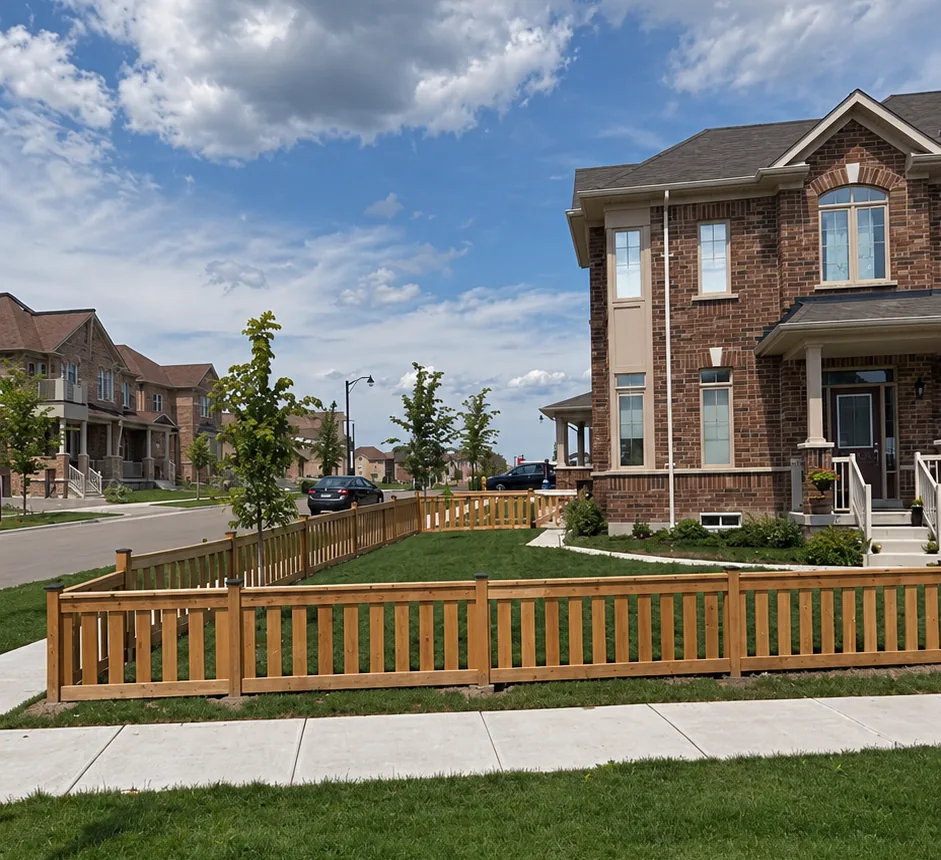
Around a pool
For most pools we recommend black aluminum pickets. The picket spacing meets the bylaws without the fence looking like a cage, and it doesn't rot at grade, where a pool fence takes the most abuse. Wood works too, as long as the rails go on the pool side so nobody can climb them from outside.
Pool enclosure heights are minimums, not maximums. Most of the GTA asks for 1.2 m (about 3 ft 11 in) or 1.22 m (4 ft), and Ajax, Oshawa and Aurora ask for 1.5 m (4 ft 11 in). Every municipality we checked requires a permit and a self-closing, self-latching gate. Our pool fence guide lists the rules by city.
Either way, the posts decide it
Aluminum posts don't rot, but a footing that heaves still throws the line out of level, and that's on the installer, not the maker. We set fence posts in concrete about 1.2 m (4 ft) deep, below the frost line, with the top of the concrete sloped to shed water. New posts mean digging, so locates come first through Ontario Dig Authority (formerly Ontario One Call).
Slopes are handled differently. Many aluminum panels can rack to follow a gentle slope, and steeper grades get stepped. A wood fence can be built to follow the grade or stepped in level sections.
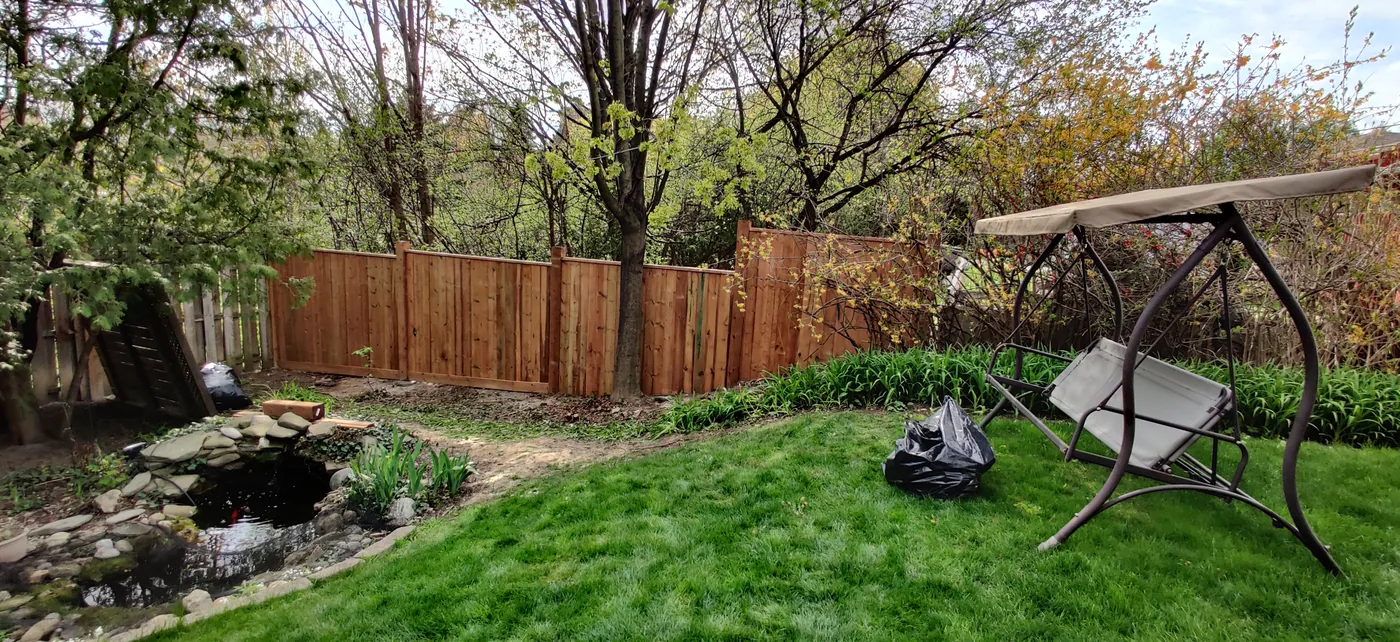
Which one to pick
Choose aluminum if:
- It's a pool enclosure
- It's a front yard fence and you want the extra height an open fence allows
- You want to keep a view or the light
- You never want to stain a fence
Choose wood if:
- Privacy is the point
- You want the lowest price per foot
- You want a horizontal or board-on-board style
- You want repairs to be one cheap board at a time
See our aluminum fences and wood fences pages, or send us the length, the height you have in mind and whether there's a pool. We'll price both so you can compare.
Sources: City of Mississauga, Fences; City of Pickering, Fences; City of Toronto, Municipal Code Chapter 447, Fences; iDeal Aluminum Products, Aluminum fence specification; Jerith, Aluminum fence warranty; Wood Preservation Canada, Above ground versus ground contact decay hazards; Ontario Dig Authority, Locates overview. Checked October 2026.
Keep reading
Deck cost guide
Installed prices per sq ft by material, plus railings and stairs.
Learn moreFence cost guide
Installed prices per linear foot by fence type, plus gates.
Learn moreBest fence for privacy
Which styles block the view, what they cost and how tall they can go.
Learn moreGlass vs aluminum railings
Cost, view, cleaning and inspection compared, and when to mix them.
Learn moreQuestions
Is an aluminum fence cheaper than wood?
Can an aluminum fence give privacy?
Which lasts longer, aluminum or wood?
Can an aluminum fence be taller in the front yard?
Tell us about your deck or fence
Send a few photos and rough measurements. We'll come back with next steps and a time to see the site.