How Long Does a Fence Last in Ontario?
Why the posts decide how long a fence lasts, what wears out first on each type of fence, and what the warranties cover.
There's no set number. No code or government body puts a lifespan on a fence, and two fences built from the same lumber can last very different lengths of time. What decides it, for wood and for most other fences, is how the posts went in.
The best Ontario numbers we found come from a fence post test at Petawawa that started in 1951. Untreated pine and spruce posts lasted 3.5 to 5.5 years on average. Most of the pressure-treated posts were still in service 47 years later. Vinyl, aluminum and composite don't rot, and the makers we checked back them for 25 years, or for as long as you own the house. They still stand on posts and footings, though.
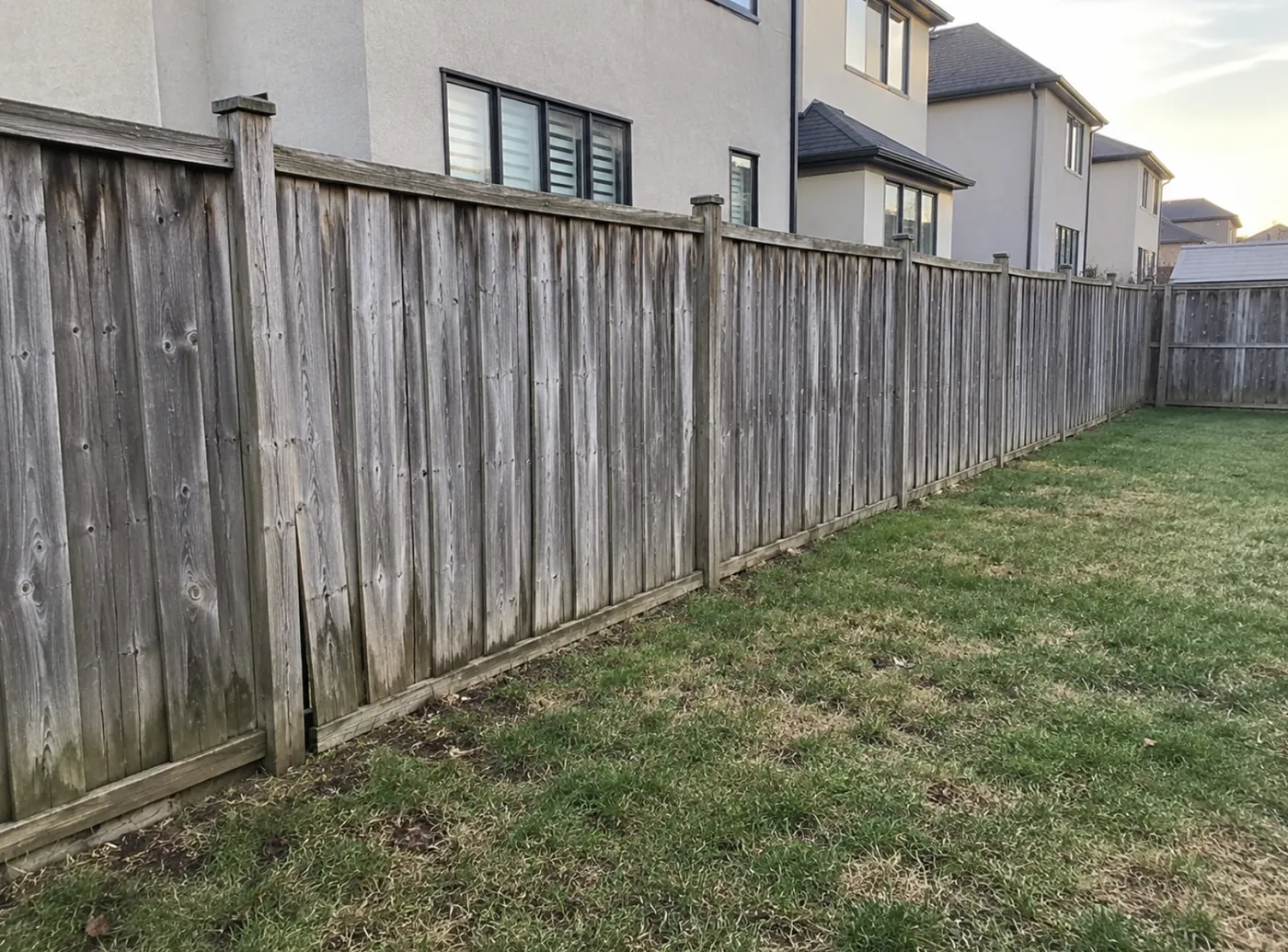
Why the posts decide it
Boards and rails sit in open air and dry out after rain. A post sits in wet soil all year. Wood Preservation Canada notes that decay moves fastest just below ground level, where the moisture and oxygen suit the fungi that break wood down. So a post can look fine from the yard and be rotting through just under the grass.
Frost is the other problem. A post set too shallow gets pushed up a little every winter until the line goes crooked. We set posts in concrete about 1.2 m (4 ft) deep, below the frost line, with the top of the concrete sloped so water runs off.
That goes for vinyl and composite too. A vinyl post is hollow, so all of its strength is in the footing.
What wears out first, by fence type
This is what usually ends each kind of fence, and what the material makers stand behind:
| Fence | What usually goes first | What backs it |
|---|---|---|
| Pressure-treated wood | Posts at the soil line, then split and loose boards | Treated posts lasted decades in the Ontario test. Preserve CA lumber has a lifetime limited warranty against rot, lumber only |
| Cedar | Posts at the soil line, and boards with a lot of pale sapwood | Natural rot resistance, but only in the heartwood |
| Vinyl | Panels cracked by hard hits in the cold, and posts that shift | One maker covers peeling, blistering and rot for as long as the original owner keeps the house |
| Aluminum | Bent pickets, and footings that move | One maker guarantees the finish won't peel, crack, chip or blister for as long as you own it |
| Composite | Posts and footings set too shallow | Trex Fencing gives a 25-year residential warranty |
| Chain link | Sagging fabric, a bent top rail, and rust where the coating wears through | Depends on the coating and wire gauge, so ask what you're getting |
A warranty isn't a lifespan. The treated wood, vinyl and aluminum warranties we read all leave out the labour to take the old material out and put new in, and none of them pass to the next owner. The vinyl warranty also excludes poor installation and ground movement, which is where most fence trouble starts. Our own 2-year workmanship warranty covers how we built it.
Pressure-treated and cedar
The Petawawa posts were treated with CCA, a preservative Health Canada says is no longer available for home building projects. Today's lumber uses copper-based treatments. Read the test as proof that treatment matters, not as a promise of 47 years.
What still holds: posts have to be rated for ground contact, a separate category from wood rated for above-ground use. Viance's rot warranty on Preserve CA lumber doesn't cover cut ends and drilled holes that weren't coated with a copper naphthenate preservative during the build. Viance also says treated wood isn't maintenance-free and recommends a water repellent with UV protection every 1 to 2 years.
Cedar's rot resistance comes from the heartwood, the darker centre of the log. The U.S. Forest Products Laboratory is clear that sapwood doesn't share it. That's why a lot of cedar fences in the GTA go on pressure-treated posts. Our cedar vs pressure-treated guide covers the trade-offs.
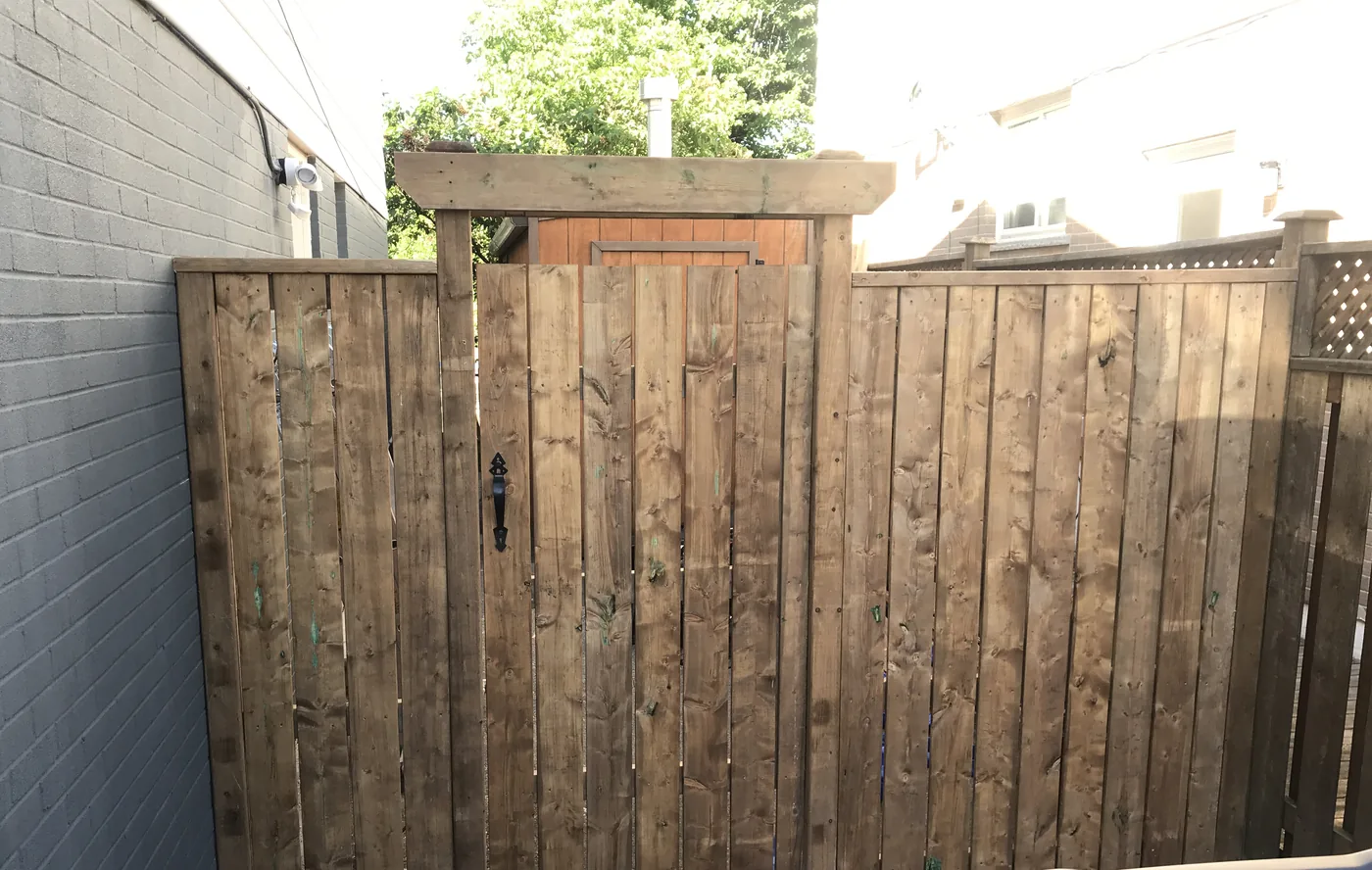
Vinyl, aluminum and composite
These don't rot, and they don't need stain. What ends them is damage and movement. A vinyl panel that takes a hard hit in January can crack, and it gets swapped rather than patched. A solid privacy panel is a flat wall for the wind to push on, so the posts and footings take a lot of load.
With vinyl, the line usually goes before the panels do. Set above the frost line, the run can walk out of line in its first spring while every panel still looks new. Our Milton vinyl fence replaced the old wood fence in the photo above.
Signs a fence is near the end
- Posts rock when you push the top
- A screwdriver sinks into a post just below the soil
- Concrete footings have lifted above the grass
- Boards are split, loose or soft along most of the run
- Rails are pulling away from the posts
- The gate sags or won't latch
A few bad posts is a repair. Most of the posts going, or boards failing along the whole run, means a new fence. Post replacement runs $250 to $500 per post. A new 100 ft pressure-treated fence runs $7,000 to $10,000, and removing the old one adds $5 to $15 per linear ft. Prices are installed, before HST, from our fence cost guide. The leaning fence guide shows how to check each post.
How to make a fence last longer
- Keep soil, mulch and firewood off the bottom of the boards
- Aim sprinklers away from the fence so the boards can dry
- Coat any cut you make in treated wood with a field preservative
- Clean and reseal wood fences on the schedule the product calls for
- Fix a loose post early, before it pulls the sections beside it over
Choosing a material? Compare them in the vinyl vs wood guide, or look at composite fences. For an older fence, see fence repair, or send us photos of the whole fence and the worst posts and we'll tell you whether it's worth fixing.
Sources: Canadian Wood Council, Performance of treated round wood posts (Petawawa, Ontario); Wood Preservation Canada, Above ground versus ground contact decay hazards; Health Canada, Staying safe around treated wood; Viance, Preserve CA lifetime limited warranty (Canada); U.S. Forest Products Laboratory, Comparative decay resistance of heartwood of native species; Merchants Metals, EverGuard vinyl fence warranty; Jerith, Aluminum fence warranty; Trex Fencing, How long does Trex fencing last?. Checked October 2026.
Keep reading
Deck cost guide
Installed prices per sq ft by material, plus railings and stairs.
Learn moreFence cost guide
Installed prices per linear foot by fence type, plus gates.
Learn moreToronto fence permits and exemptions
When a Toronto fence needs a permit, and how exemptions work.
Learn moreGet your deck ready for winter
What to check in fall, and how to shovel and melt ice safely.
Learn moreQuestions
How long does a pressure-treated fence last in Ontario?
What fence lasts the longest?
Does a fence warranty cover the labour to replace it?
Should I repair my old fence or replace it?
Tell us about your deck or fence
Send a few photos and rough measurements. We'll come back with next steps and a time to see the site.