Fence Posts in Ontario: How Deep, Concrete or Gravel, and Frost Heave
How deep fence posts go in the GTA, when concrete beats gravel, and how frost lifts a post that's set wrong.
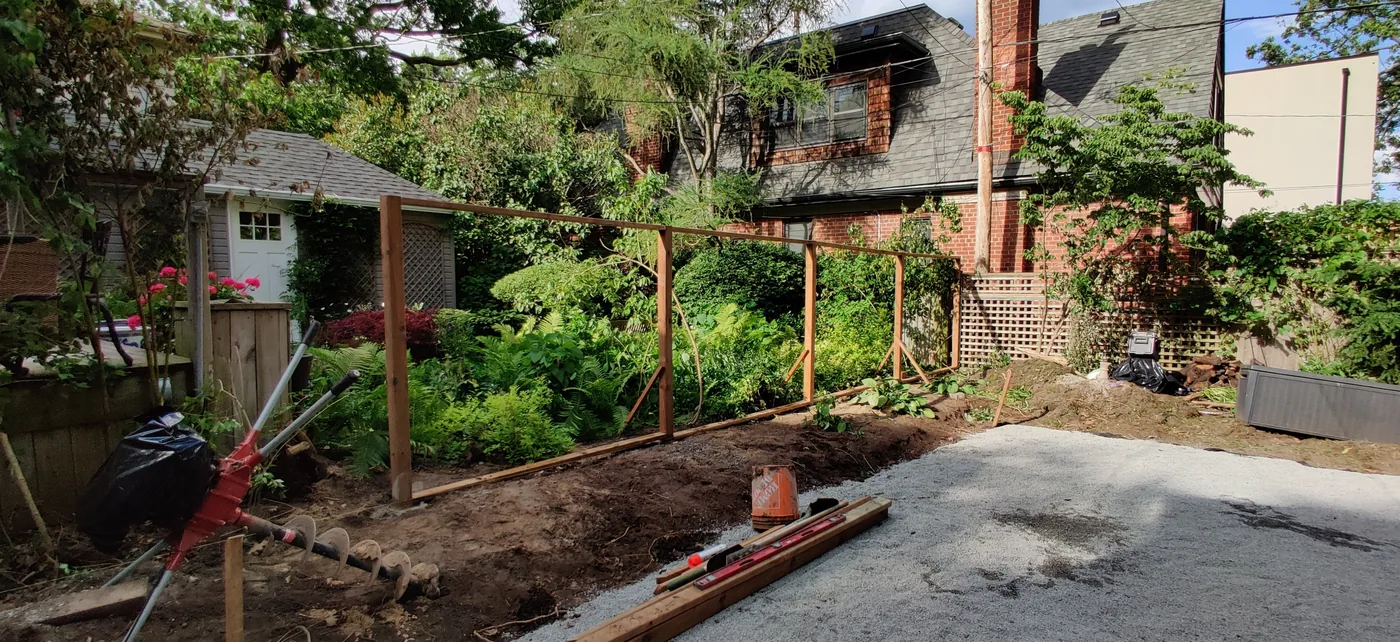
In the GTA, set fence posts about 1.2 m (4 ft) deep, in concrete, with the bottom below the frost line. That's how we set the posts on every new wood fence. It's deeper than most rules of thumb, and it's the depth that keeps a fence straight after a few winters.
No code sets that number for an ordinary fence. The Ontario Building Code sets footing depths for buildings and decks, and in Toronto a regular backyard fence doesn't need a permit at all (see our Toronto fence permit guide). Nobody inspects the holes, so the depth comes down to whoever digs them. Pool enclosures have their own bylaws, covered in our pool fence guide.
Why 1.2 m (4 ft)
Frost is the reason. When wet soil freezes, ice builds up in layers and pushes the ground up. For footings on clay, or on soil nobody has classified, the Building Code uses 1.2 m (about 3 ft 11 in) or the depth of frost, whichever is deeper. Most GTA yards are clay or fill, so we hold fence posts to the same depth. Our deck footing depth guide explains where that number comes from.
Most store-bought advice goes shallower. Quikrete's instructions say to dig to 1/3 to 1/2 of the post's height above ground, plus 6 in. For a 6 ft fence, that's about 0.8 to 1.1 m (2.5 to 3.5 ft). That's enough to hold a post up. It doesn't get the bottom below an Ontario frost line.
How frost lifts a post
Frost also grabs a post from the sides. The National Research Council's digest on adfreezing explains how: frozen soil bonds to the sides of a post, and as ice layers grow below, they lift the frozen ground and the post with it. The lift is uneven, and loose soil drops into the gap under the post, so it never settles all the way back. Each winter it comes up a little more.
The same digest notes that a footing below the frost line doesn't guarantee protection on its own. Shape and water matter too. A post holds when:
- The bottom sits in ground that doesn't freeze, so the post is anchored under the frozen layer
- The footing has straight sides. Concrete that mushrooms out wide at the top gives frozen soil more to grab
- Water is kept away. The top of the concrete is sloped to shed rain, and gravel at the bottom lets the hole drain
That's also why a fence can look fine the first summer and lean after the second winter. Our fall and winter fence guide has a diagram of a shallow post being lifted.
Concrete or gravel?
Both get used. The difference is what holds the post and where the water goes.
| Concrete | Gravel only | |
|---|---|---|
| Holding the post | Locked in and stiff against wind | Held by packed stone, can work loose and rock |
| Water | Sheds water if the top is sloped. A flat or sunken top holds it against the wood | Drains, if the soil around the hole drains |
| Frost | Deep, straight-sided footings resist heave | Drained gravel eases the grip. Wet gravel freezes solid |
| Replacing the post later | The old concrete has to be broken out | Easier to dig out |
| Where it fits | Board privacy fences, gates, tall or windy runs | Low, open fences in sandy, well-drained ground |
A 6 ft board fence is a solid wall, and every post takes the wind that hits it. We want those posts locked in, so we set them in concrete. The concrete sits on a gravel base so water can drain out the bottom, and the top is sloped above the grass so rain runs off instead of pooling against the wood. Quikrete calls for the same two things: 6 in of gravel or crushed stone in the bottom of the hole, and a concrete top that slopes away from the post.
Gravel alone works where the ground drains. GTA clay often doesn't, so a gravel-filled hole collects water like a cup. The NRC digest warns that granular backfill has to be well drained or it freezes into a solid mass, and then it grips the post like any frozen soil.
Post size, spacing and gates
Depth isn't the only thing that keeps a fence straight:
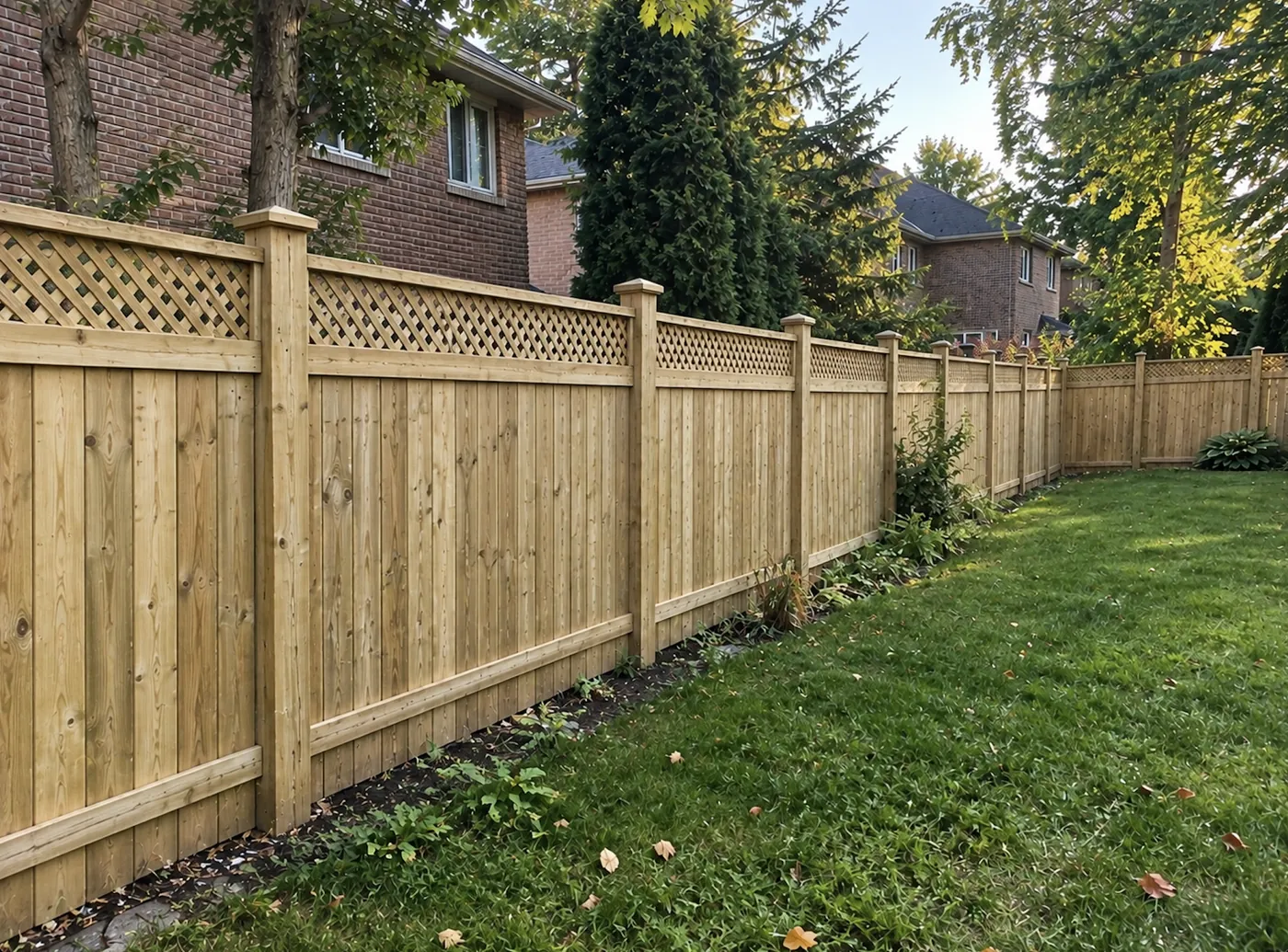
- Post size: 4x4 posts are common on low fences. On tall privacy fences, lattice tops and gates, we use 6x6 posts
- Spacing: wood fence posts usually sit no more than 2.4 m (8 ft) apart, to match 8 ft rails. Horizontal fences and composite systems need closer spacing
- Gates: the hinge post carries the whole gate and is usually the first post to move. Our sagging gate guide covers what goes wrong
- Ground contact: decay moves fastest just below ground level, so posts have to be treated for ground contact. Wood Preservation Canada calls for at least 2 brushed coats of field preservative on any cut end
Where you can't dig
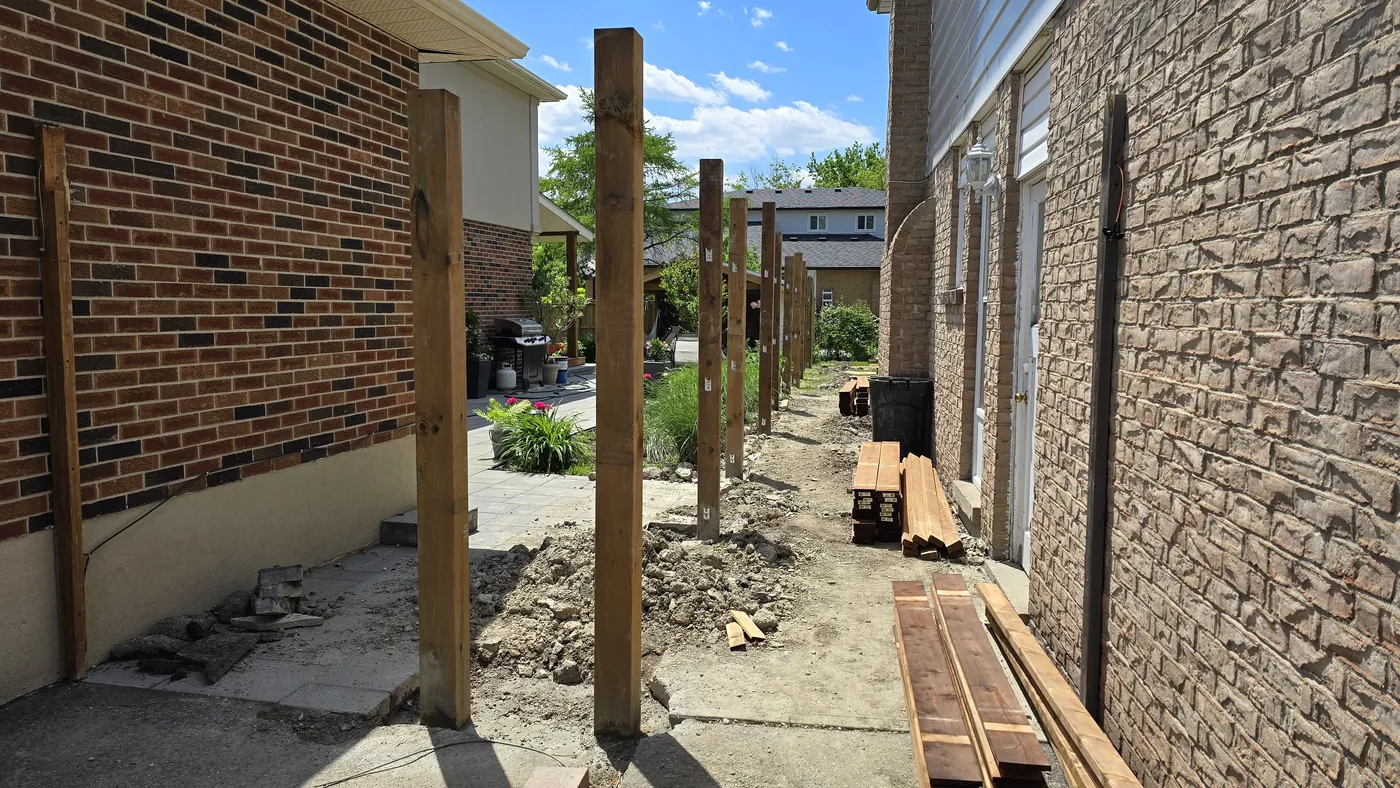
Across a patio, path or slab, a post can sit on a steel base bolted to the concrete instead. We did that on a fence post replacement in Markham, where the fence ran along a concrete side path. It only works where the concrete is sound.
Before anyone digs
Every post hole needs locates first. Ontario Dig Authority (formerly Ontario One Call) marks public utility lines for free, with at least 5 business days' notice for a single address. Private lines aren't included, like a gas line to a BBQ or pool heater, or power run out to a shed. You arrange a private locate for those.
Concrete never goes onto frozen soil or ice at the bottom of a hole. If a fence is going in late in the year, the fall and winter guide covers what changes.
If your posts have already moved
A sound post that heaved can sometimes be dug out and reset deeper. A post rotted at the ground has to be replaced: the old post and its concrete come out, and a new post goes into fresh concrete about 1.2 m (4 ft) deep. Post replacement runs about $250 to $500 per post, installed, before HST, from our fence cost guide.
Our leaning fence guide shows how to check the posts yourself, and the fence repair page covers how we fix them. Or send us photos of the fence and the worst posts.
Sources: 2024 Ontario Building Code, Article 9.12.2.2; National Research Council Canada, Canadian Building Digest 128, Adfreezing and frost heaving of foundations; Quikrete, Setting posts in concrete; Wood Preservation Canada, The importance of field treating pressure treated wood products and Above ground versus ground contact decay hazards; Ontario Dig Authority, Locates overview. Checked October 2026.
Keep reading
Deck cost guide
Installed prices per sq ft by material, plus railings and stairs.
Learn moreFence cost guide
Installed prices per linear foot by fence type, plus gates.
Learn moreBest fence for privacy
Which styles block the view, what they cost and how tall they can go.
Learn moreGlass vs aluminum railings
Cost, view, cleaning and inspection compared, and when to mix them.
Learn moreQuestions
How deep should fence posts be in Ontario?
Should fence posts be set in concrete or gravel?
Why do fence posts heave in winter?
How much does it cost to replace a fence post?
Tell us about your deck or fence
Send a few photos and rough measurements. We'll come back with next steps and a time to see the site.